No products in the cart.


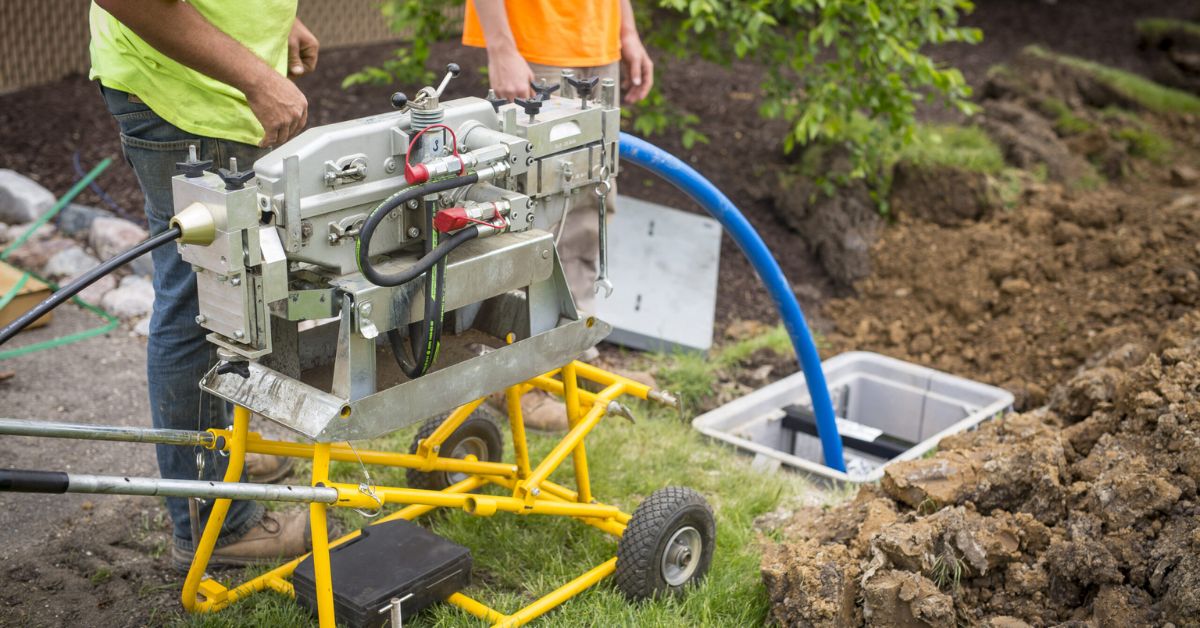
The demand for high-speed internet continues to grow, pushing network providers to expand their fiber optic infrastructure at an unprecedented rate. To meet this demand, installation crews rely on specialized equipment to deploy cables quickly and safely. The fiber blowing machine has become an indispensable tool in this process, revolutionizing how technicians install fiber optic cables within conduits.
By learning about the machine’s operation, professionals in the telecommunications field can optimize deployment projects. Below, Millennium Broadband Solutions is discussing how a fiber blowing machine installs cable efficiently, equipping you with the knowledge you need for a reliable network installation.
Before a fiber blowing machine can be used, technicians must properly prepare the installation path. This phase is critical to prevent obstacles that could impede the cable or damage the conduit. Crews inspect the entire length of the underground duct, ensuring it is clean, continuous, and free of debris or moisture.
They often perform a test by pushing a mandrel or a sponge-like projectile, known as a duct-rodding pig, through the conduit to verify its integrity. Any identified blockages or breaks in the duct must be repaired to create an unobstructed pathway for the fiber optic cable. Proper preparation minimizes friction and reduces the risk of installation failures.
A fiber blowing machine installs cable using a finely tuned combination of two forces: high-volume compressed air and a mechanical pushing mechanism. The machine clamps onto the fiber optic cable and feeds it into the duct. Simultaneously, a powerful air compressor injects a high volume of air into the same duct. This airflow creates a cushion around the cable, effectively lifting it and reducing the friction between the cable jacket and the inner wall of the conduit.
The mechanical pusher provides a consistent forward force, ensuring the cable advances steadily along the duct. This dual-action method allows for longer installation distances and faster speeds compared to traditional cable pulling.
The air compressor is a vital component of the fiber blowing system. It supplies the high volume of compressed air needed to propel the cable through the duct. The specifications of the compressor, particularly its cubic feet per minute (CFM) rating, must match the requirements of the job.
Factors like the duct’s diameter, the length of the installation path, and the cable’s weight determine the necessary airflow. The air must be clean and dry to prevent moisture from entering the duct, as water can increase friction and potentially freeze in colder climates, causing blockages. An aftercooler is often used with the compressor to cool and dry the compressed air before it enters the fiber blowing machine.
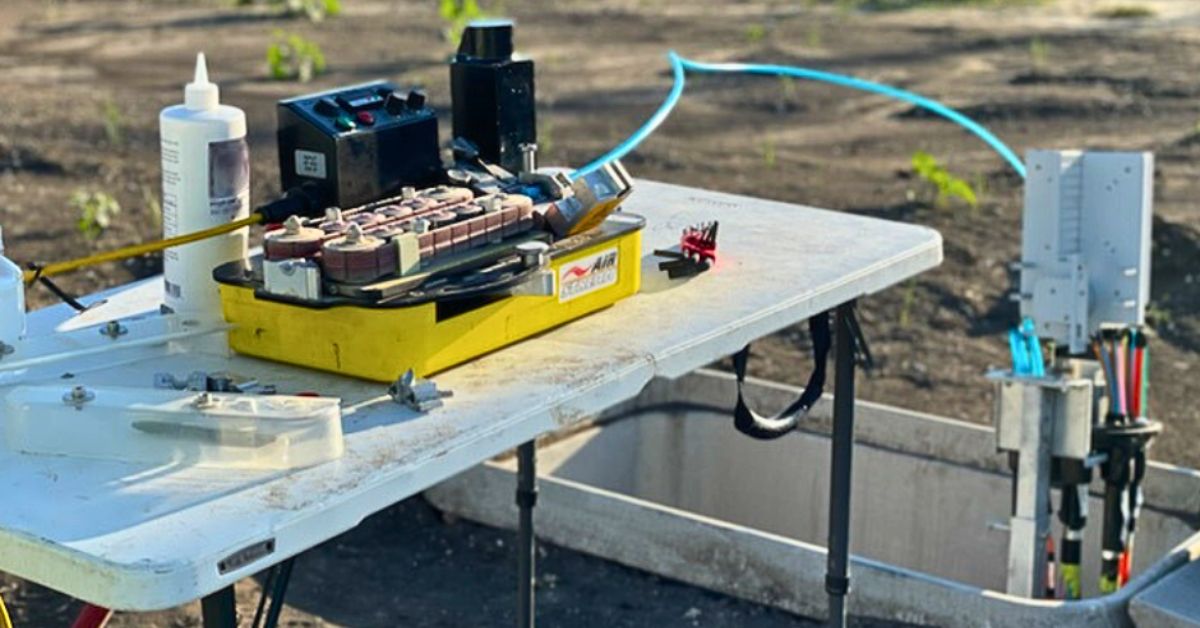
While airflow reduces friction, the pusher unit provides the consistent motive force that moves the cable forward. This unit consists of a drive system, typically powered by hydraulic or pneumatic motors, that turns a set of belts or wheels. These components gently grip the cable and push it into the conduit at a controlled speed.
The machine’s operator can adjust the pushing force and speed to match the conditions of the installation. This control is crucial for preventing damage to the delicate fiber optic cable. The pusher ensures the cable does not buckle or stall, especially when navigating bends or undulations in the duct path.
To maintain the air pressure needed to float the cable, the system relies on specialized cable seals. These seals are installed at the entry point of the duct where the fiber blowing machine is connected. They create a tight fit around the cable, preventing the compressed air from escaping back toward the machine.
The seals accommodate different cable diameters while allowing the cable to pass through with minimal resistance. An effective seal ensures that almost all the compressed air is directed down the duct, maximizing the force available to carry the cable forward and achieving optimal blowing distances.
Modern fiber blowing machines feature sophisticated control systems that allow operators to monitor and adjust the installation process in real time. These controls typically include:
This level of control enables the operator to fine-tune the machine’s performance based on the specific conditions of the duct and the type of cable being installed. For example, the operator might increase air pressure to navigate an incline or reduce pushing force if the system detects increased resistance.
Precision is paramount for successful and damage-free installation. For projects requiring specific equipment, a fiber optic blowing machine rental provides access to the latest technology without a large capital investment.
The core principle behind fiber blowing is the piston effect, where moving air carries the cable. The compressed air injected into the duct creates a pressure differential, with higher pressure behind the cable and lower pressure in front. This pressure, combined with the viscous drag of the airflow along the cable’s surface, lifts the cable and carries it forward.
The cable essentially floats on a cushion of air, minimizing contact with the duct wall. This drastic reduction in friction is what allows for installation distances of several kilometers in a single shot, far surpassing the capabilities of traditional pulling methods.
One of the most significant advantages of using a fiber blowing machine is the dramatic increase in installation speed. Traditional cable pulling is often slow, labor-intensive, and limited to shorter distances.
In contrast, fiber blowing allows technicians to install thousands of feet of cable in a matter of minutes. Speeds can often exceed 300 feet per minute, depending on the project parameters. This efficiency translates into significant labor cost savings and allows network providers to complete large-scale deployment projects in a fraction of the time.
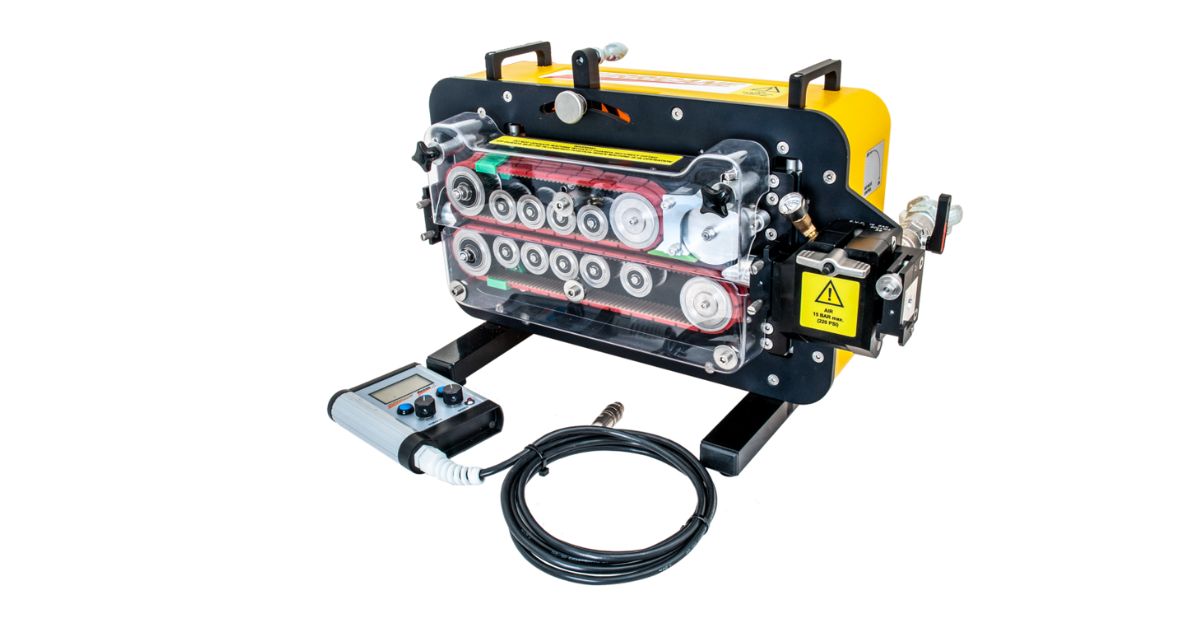
The efficiency and safety of fiber blowing machines have made them the standard for modern fiber optic network construction. By combining controlled pushing force with high-volume airflow, these machines can install cables faster, over longer distances, and with minimal risk of damage compared to traditional methods. Choose Millennium Broadband Solutions as your partner for reliable fiber network equipment and tools.

ABSTRAP Spacer, Stackable, 1/2″ Cable Spacer, Std Pack Qty. 100, Priced per Ea