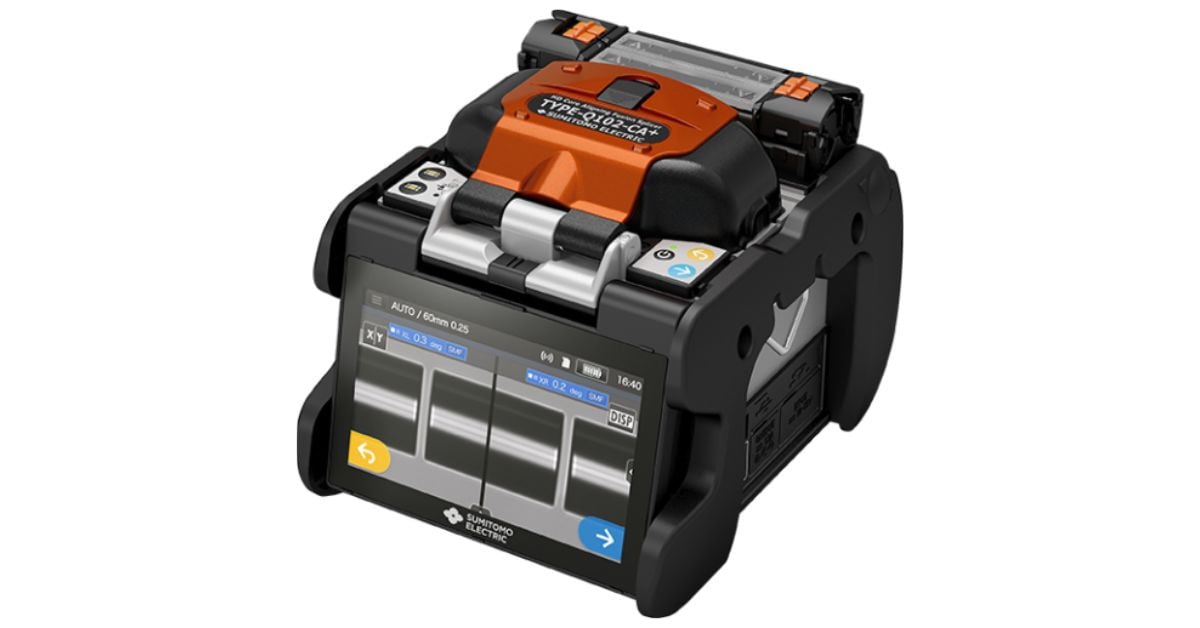
Fiber optic networks form the backbone of modern communication, requiring precise connections to maintain signal integrity. Fusion splicing is a critical process that permanently joins two optical fibers, and the choice of splicer technology significantly impacts network performance. The two primary methods technicians use are core alignment and cladding alignment. It’s important to know the differences between these technologies before selecting the appropriate tool for a given application. Here’s an explanation of core alignment vs. cladding alignment fusion splicers.
How Does a Core Alignment Fusion Splicer Work?
A core alignment fusion splicer uses a complex system of cameras and motors to precisely align the cores of two optical fibers before fusing them. The core is the central part of the fiber that transmits the light signal. This method involves a sophisticated optical system, often using two or three cameras, to view the fibers from multiple angles (X, Y, and sometimes Z axes). The splicer’s internal software analyzes these images to locate the exact position of each fiber’s core. It then directs micro-positioning motors to make minute adjustments, moving the fibers until their cores are perfectly concentric. Once aligned, the machine initiates an electric arc that melts the fiber ends and fuses them into a single, continuous strand. This direct alignment of the light-carrying cores ensures the lowest possible splice loss.
How Does a Cladding Alignment Fusion Splicer Function?
A cladding alignment fusion splicer aligns fibers based on their outer diameter, known as the cladding. This method is simpler and faster than core alignment. The splicer uses a fixed V-groove to hold the fibers in place. When the technician places the fibers into the groove, their outer surfaces are brought into alignment. This technique assumes that if the cladding is perfectly centered, the core will also be aligned. The machine then uses a single camera to perform a final check before generating the electric arc to fuse the fibers. Because it does not directly observe and align the cores, this method relies heavily on the quality and concentricity of the fiber itself.
 What Are the Key Differences in Alignment Methods?
The fundamental difference lies in what part of the fiber the machine aligns. Core alignment directly targets the light-carrying core, actively compensating for any inconsistencies in fiber geometry. Cladding alignment aligns the outer cladding, operating on the assumption that the core is perfectly centered within it. This distinction is the primary driver of all other performance and cost differences between the two technologies.
How Do They Differ in Performance and Splice Loss?
Core alignment splicers deliver superior performance, consistently achieving ultra-low splice loss, typically below 0.02 decibels (dB). Because they actively align the cores, they can correct for imperfections like core-to-cladding concentricity errors or slight variations in fiber diameter. This precision makes them the preferred choice for long-haul networks and single-mode fiber applications where minimizing signal degradation is paramount. Cladding alignment splicers generally produce higher splice loss, often ranging from 0.05 dB to 0.10 dB. The final splice quality depends heavily on the manufacturing precision of the optical fiber. If the core is not perfectly centered within the cladding, a misalignment will occur, resulting in higher signal loss. This level of performance is often acceptable for shorter-distance networks, such as Fiber to the Home (FTTH) and local area networks (LANs), especially when using modern, high-quality fiber.
What Is the Cost Difference Between Splicers?
Core alignment fusion splicers are significantly more expensive than their cladding alignment counterparts. The higher cost stems from the advanced technology required for direct core observation and positioning, including:
- Multiple high-precision cameras
- Complex image processing software
- Sophisticated micro-positioning motors
Cladding alignment splicers have a simpler design with fewer components—typically a fixed V-groove and a single camera system. This results in a lower initial purchase price, making them a more accessible option for contractors and businesses with limited capital. For organizations needing this capability for specific projects, a fiber splicing machine rental can provide access to high-end equipment without the substantial upfront investment.
When Is Core Alignment the Better Choice?
You should choose a core alignment splicer for applications where performance is the highest priority, and you must minimize signal loss. These scenarios include backbone networks, long-haul telecommunications, submarine cable systems, and data centers. They’re essential for single-mode fiber splicing, where the small core diameter demands extreme precision. Core alignment is also necessary when splicing specialty fibers or dissimilar fiber types.
When Is Cladding Alignment Sufficient?
A cladding alignment splicer is a practical and cost-effective choice for applications where a slightly higher splice loss is tolerable. These include last-mile FTTH installations, LANs, and premise networks. Multimode fiber splicing, with its larger core diameter, is also more forgiving, making cladding alignment a suitable method. For high-volume, short-distance deployments, the speed and lower cost of cladding alignment splicers provide a significant advantage.
 How Do They Handle Different Fiber Types?
Core alignment splicers are exceptionally versatile and can handle a wide range of fiber types, including single-mode, multimode, dispersion-shifted, and nonzero dispersion-shifted fibers. Their ability to directly see and align the core makes them effective even when splicing different types of fibers together. Cladding alignment splicers work best with standard, high-quality single-mode or multimode fibers where the core is reliably centered. They struggle with specialty fibers or older fibers that may have greater core-to-cladding concentricity errors, which would result in unacceptable splice loss.
What Are the Main Pros and Cons of Each?
Core Alignment Splicers
- Pros: Ultra-low splice loss, high precision, versatility with different fiber types, and independence from fiber quality.
- Cons: Higher initial cost, larger physical size, and slightly slower splicing process.
Cladding Alignment Splicers
- Pros: Lower cost, faster operation, smaller and more portable design, and simpler to use.
- Cons: Higher potential splice loss, performance depends on fiber quality, and limited effectiveness with specialty fibers.
Choosing between a core alignment and a cladding alignment fusion splicer requires a careful evaluation of your specific needs. If your work involves long-haul networks or single-mode fiber where minimizing signal loss is nonnegotiable, the precision of a core alignment splicer is a necessary investment. For FTTH, LANs, or other short-distance applications where speed and cost-effectiveness are key drivers, a cladding alignment splicer offers a compelling and practical solution. By aligning the right technology with the application, you ensure the long-term reliability and performance of your fiber optic network. Get the equipment you need from Millennium Broadband Solutions. Call today for a quote!