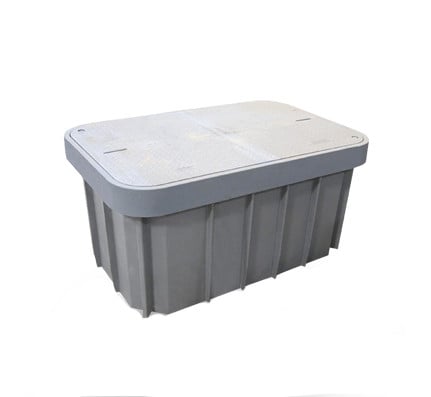
Fiber network installations demand durability, long-term performance, and predictable maintenance outcomes. Every component placed underground must withstand environmental stress, traffic loads, and decades of service without compromise. Handholes sit at the center of that reality. They provide access to critical fiber pathways, splice points, and network transitions. Contractors and ISPs often weigh polymer concrete handholes against plastic (HDPE) alternatives due to cost, installation speed, and availability. The difference becomes even more apparent in rural broadband builds, utility corridors, and high-traffic environments where failure carries real consequences. Millennium Broadband Solutions created this guide to break down the benefits of polymer concrete vs. plastic handholes, with insights drawn directly from fiber network installation experience.
Material Composition and Structural Integrity
Polymer concrete handholes use a blend of aggregates and resin binders engineered for compressive strength and dimensional stability. This composition creates a dense, rigid structure that resists deformation under load. Plastic handholes rely on thermoplastics that can flex under pressure and fatigue over time. In fiber networks, flex introduces risk. A handhole that shifts, bows, or warps compromises conduit alignment and cable bend radius. Polymer concrete maintains its shape year after year, even when soil conditions change or freeze-thaw cycles repeat season after season. Plastic enclosures may meet minimum load ratings at installation, but repeated stress often leads to cracking around conduit entries or lid interfaces. Polymer concrete eliminates that vulnerability by design.
Load Ratings and Traffic Performance
Load-bearing capacity plays a decisive role in handhole selection. Fiber routes frequently cross driveways, parking lots, and shared utility easements. Polymer concrete handholes consistently support higher ANSI and Tier load ratings without reinforcement. Plastic handholes often require additional framing, concrete collars, or steel lids to reach similar performance levels. These add-ons increase labor, installation time, and total project cost. Polymer concrete handholes deliver predictable performance under vehicular loads, maintenance trucks, and construction equipment. Contractors trust them in areas where access conditions may change over time without warning.
Longevity in Underground Fiber Environments
Fiber networks represent long-term infrastructure investments. Components buried today must perform reliably for decades. Polymer concrete excels in this environment because it resists rot, corrosion, and material degradation. Plastic handholes degrade faster when exposed to UV during staging, petroleum-based contaminants in soil, and temperature extremes without proper material protected coatings. Over time, plastic loses rigidity and becomes brittle. Polymer concrete remains stable and inert regardless of surrounding conditions. This longevity directly reduces lifecycle costs. Fewer replacements mean fewer outages and fewer disruptions to end users.

Environmental Stability in Rural and Urban Deployments
Rural broadband installations often face aggressive soil conditions, groundwater exposure, and seasonal freeze-thaw cycles. Polymer concrete handles these conditions without expansion, contraction, or structural compromise. Plastic handholes expand and contract with temperature swings. That movement stresses conduit connections and increases the likelihood of separation or water intrusion. In wet environments, plastic enclosures may float or shift if installers fail to anchor them properly. Polymer concrete’s weight and density anchor the enclosure naturally. Installers gain confidence that the handhole will stay exactly where they place it, even in unstable soil conditions.
Installation Efficiency and Field Handling
Polymer concrete handholes are commonly used by experienced fiber crews during installation. Their rigidity allows precise conduit alignment during placement. Crews can avoid the bracing and corrective steps often required with flexible plastic boxes. While plastic handholes weigh less, that advantage often disappears once crews add concrete collars or stabilization measures. Polymer concrete installs cleanly, backfills easily, and maintains grade without ongoing adjustment. Contractors working on large-scale builds value consistency. Polymer concrete provides predictable handling characteristics across every site condition.
Security and Network Protection
Fiber infrastructure remains vulnerable to tampering, accidental damage, and unauthorized access. Polymer concrete handholes provide a higher level of inherent security due to their mass and strength. Plastic handholes are more susceptible to lid deflection and wall penetration, which may allow easier access to internal network components. Polymer concrete resists prying, crushing, and impact far more effectively. For networks carrying mission-critical data, physical protection matters just as much as signal integrity. Polymer concrete protects fiber assets without relying on additional solutions.
Moisture Resistance and Water Management
Water infiltration represents one of the most common causes of fiber damage. Polymer concrete handholes resist moisture absorption and maintain tight tolerances at seams and lid interfaces. Plastic handholes flex under soil pressure, which can create micro-gaps that allow water intrusion over time. Standing water accelerates jacket degradation and increases the risk of splice contamination. Polymer concrete’s rigidity preserves gasket compression and keeps water where it belongs. Installers experience fewer drainage issues and cleaner internal environments throughout the life of the network.
Cost Considerations Beyond Initial Purchase
Plastic handholes typically have a lower upfront material cost. However, overall project cost may vary when total installed cost and long-term maintenance requirements are considered. Project cost considerations can include:
- Replacement frequency
- Remediation labor
- Network downtime
- Emergency maintenance calls
- Reinforcement or stabilization requirements
Polymer concrete handholes have different installation and performance characteristics that may influence these factors. While the initial material cost is generally higher, lifecycle cost outcomes depend on project conditions, installation practices, and maintenance requirements.
Polymer Concrete Aligns With Professional Fiber Standards
Experienced installers understand that infrastructure failures rarely trace back to fiber cable itself. Enclosure failure, environmental stress, and access point degradation cause most issues. Polymer concrete aligns with professional installation standards by reducing uncertainty. When contractors specify polymer concrete, they build confidence into the network from day one. The enclosure supports conduits, protects splices, and ensures access points remain serviceable under all conditions. For teams responsible for utility handholes across long-distance routes, polymer concrete becomes the default choice rather than an upgrade

The Right Handhole for Long-Term Network Success
Fiber network performance depends on decisions made long before the first cable gets pulled. Handhole selection influences maintenance schedules, operational costs, and system reliability. Polymer concrete and plastic handholes differ in structural characteristics, environmental resistance, and lifecycle considerations. Polymer concrete handholes are used in broadband infrastructure projects where structural performance and environmental conditions are key factors. Selection typically depends on project requirements, installation conditions, and stakeholder preferences, including those of ISPs, contractors, and municipalities. Millennium Broadband Solutions works with fiber professionals who understand that cutting corners underground leads to expensive problems above ground. Choosing polymer concrete handholes over plastic reflects a commitment to quality, durability, and network longevity.