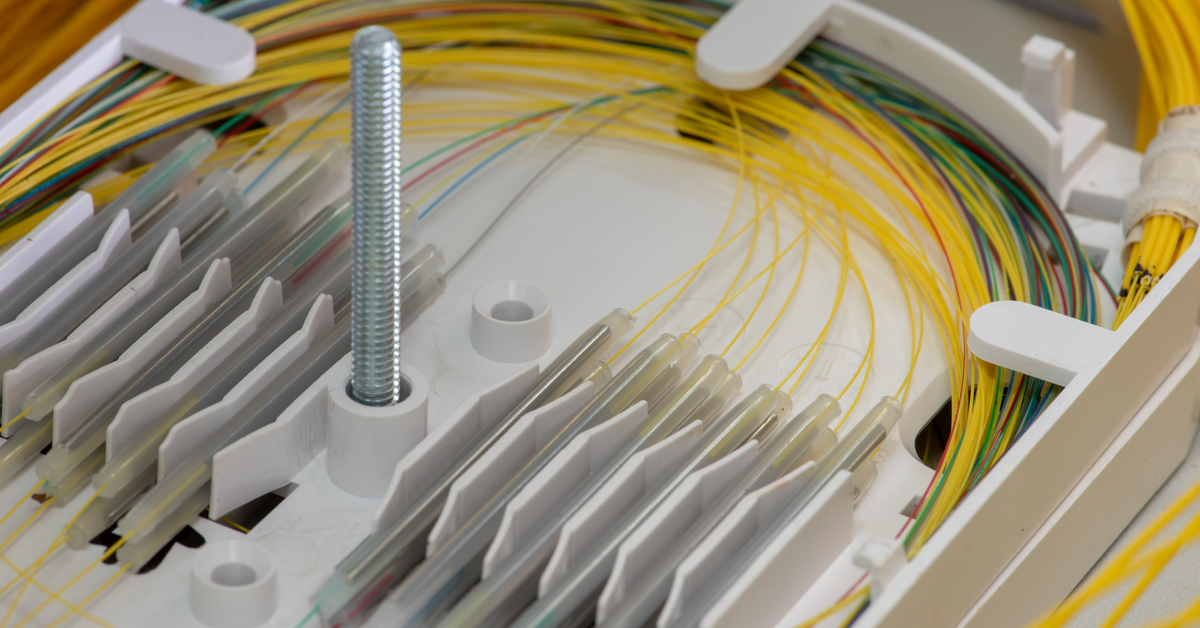
Modern broadband projects demand precision from the first trench to the final connection point. Organized fiber routing inside a splice enclosure panel protects network reliability, improves troubleshooting, and supports long-term scalability for expanding infrastructure. Contractors and ISPs working in rural broadband environments often face harsh weather and aggressive deployment timelines that make proper fiber organization even more important.
Millennium Broadband Solutions supports broadband expansion projects nationwide with the tools, materials, rentals, and expertise needed to keep networks operating efficiently. Learn the importance of organizing fibers inside a splice enclosure panel and how our tools can support project completion.

Why Fiber Organization Matters in Broadband Infrastructure
A poorly organized splice enclosure creates confusion during installation and future maintenance. Technicians lose valuable time tracing cables, identifying splice points, and correcting routing errors that could have been prevented during initial setup. Clean organization protects fiber integrity by reducing unnecessary tension and crowding inside the panel. Structured fiber management also helps contractors complete upgrades faster as networks expand into rural communities and new construction developments.
Broadband providers rely on stable infrastructure to maintain uninterrupted connectivity for residential and commercial customers. Every splice point represents a critical section of the network that requires long-term protection and accessibility. Organized panels reduce service interruptions because technicians can quickly isolate and repair damaged sections without disturbing surrounding fibers. This approach lowers operational costs while supporting dependable network performance.
Start With a Strategic Cable Entry Plan
Successful fiber organization begins before technicians place a single splice tray inside the enclosure. Teams should identify entry points, cable routing paths, slack storage locations, and splice tray assignments during the planning phase. A consistent layout reduces installation errors and creates a standardized workflow across multiple job sites. Standardization also helps maintenance crews work more efficiently because every enclosure follows the same organizational structure.
Installers should separate incoming and outgoing cables whenever possible to reduce congestion. Clear directional routing prevents accidental crossings that complicate future maintenance procedures. Teams should also label cable groups immediately during installation instead of waiting until the enclosure reaches completion. Early labeling prevents confusion and eliminates unnecessary rework later in the project lifecycle.
Use Color Coding for Faster Identification
Color coding simplifies maintenance work and improves installation accuracy across large-scale broadband deployments. Technicians can quickly identify fiber groups, splice locations, and service paths without tracing every cable manually. Organized color systems reduce troubleshooting time and minimize the risk of disconnecting active customer services during maintenance. Faster identification also helps contractors stay on schedule during aggressive deployment timelines.
Most broadband teams follow industry-standard color-coding systems for consistency across multiple projects. Matching labels, splice trays, and cable markers creates a unified organizational method that improves readability inside crowded enclosures. Crews should document the color scheme clearly so that future technicians understand the routing structure immediately upon opening the panel. Strong documentation supports long-term operational efficiency.
Label Every Connection Clearly
Accurate labeling is one of the most important steps in splice enclosure organization. Clear labels eliminate guesswork during troubleshooting, maintenance, and future upgrades. Technicians should label cables, splice trays, ports, and routing paths using durable materials designed for harsh environmental conditions. Permanent identification preserves organizational integrity even years after installation.
A strong labeling system should include:
- Cable identification numbers
- Service direction indicators
- Splice tray references
- Installation dates
- Technician or contractor records
- Maintenance history markers
Control Slack Storage Inside the Enclosure
Excess slack often becomes one of the biggest contributors to disorganized splice panels. Loose coils create congestion that restricts airflow, blocks access points, and increases the chance of accidental fiber movement during maintenance. Organized slack storage keeps fibers secure while preserving easy access to splice trays and connection points. Technicians should measure cable lengths carefully before routing fibers into the enclosure.
Dedicated slack storage brackets and routing guides can maintain consistent cable placement throughout the panel. Controlled storage methods also reduce pressure on sensitive splice areas by distributing cable weight evenly. Proper slack management becomes especially important in underground and aerial broadband deployments where environmental conditions frequently shift over time. Stable cable positioning protects long-term network reliability.

Prepare for Future Network Expansion
Broadband infrastructure rarely remains static after initial installation. Rural communities continue expanding access to high-speed internet, and contractors frequently add new service connections as demand increases. Organized splice enclosure panels simplify future upgrades because technicians can add capacity without disrupting existing services. Scalable layouts support long-term operational efficiency and reduce unnecessary reconstruction costs.
Installers should leave strategic space inside the enclosure for future cable additions and splice trays. Forward-thinking organization prevents overcrowding as networks evolve over time. Clear routing paths also allow technicians to integrate new fibers quickly during expansion phases. Infrastructure planning that supports growth creates stronger long-term value for ISPs and contractors alike.
Environmental Protection Supports Long-Term Reliability
Organized enclosures contribute directly to environmental protection and network durability. Properly secured fibers resist movement caused by vibration, moisture intrusion, and temperature fluctuations in outdoor deployments. Clean routing also improves sealing performance because cables fit correctly within designated entry points and grommets. Stable internal organization reduces wear on cable jackets and splice points over time.
High-quality fiber optic splice enclosures provide weather-resistant protection for underground, aerial, and harsh-environment broadband applications. Durable enclosure systems help contractors maintain uninterrupted service even in demanding rural deployment conditions. Millennium Broadband Solutions supports these projects with broadband infrastructure expertise, equipment rentals, materials sourcing, and deployment guidance tailored to large-scale network expansion initiatives.
Training and Consistency Improve Installation Quality
Even the best enclosure hardware cannot compensate for inconsistent installation practices. Broadband contractors should establish standardized procedures for routing, labeling, slack storage, and tray management across all projects. Consistent training improves installation quality while reducing preventable maintenance issues later in the network lifecycle. Organized work habits also create safer and more productive job sites.
Field crews benefit from repeatable workflows that simplify installation under demanding project timelines. Standard operating procedures reduce variability between technicians and improve overall network reliability. Broadband providers serving rural America depend on organized infrastructure systems that remain serviceable for years after deployment. Strong organizational discipline inside every splice enclosure panel supports that long-term success.
Build Stronger Broadband Networks With Millennium
Millennium Broadband Solutions continues to help contractors and ISPs build dependable broadband infrastructure across the United States through equipment rentals, material sourcing, engineering support, and deployment expertise. Our commitment to rural broadband expansion supports reliable connectivity for underserved communities while helping providers maintain efficient project execution. Organized fibers inside splice enclosures remain one of the most important foundations for long-term network success. Reach out to Millennium for a partner who can take a comprehensive approach to your project.