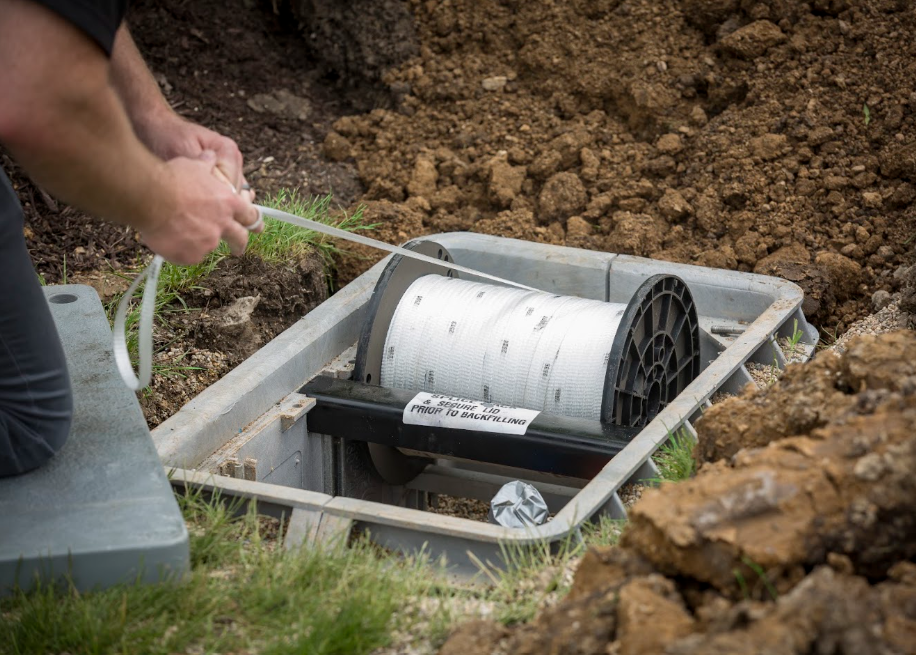
Pre-pulling innerduct can save valuable time during fiber construction, but the process only works when crews choose and handle their pulling material correctly. Mule tape gives installers a flat, strong pulling medium that travels through conduit while providing a dependable path for future cable or innerduct placement. Contractors can use it to prepare conduit runs before the next phase of construction reaches the site, which helps crews organize work around equipment, labor, and delivery schedules.
Millennium Broadband Solutions encourages a careful approach, as it reduces avoidable friction, tangles, damaged duct, and lost pulling lines that can slow a broadband build. Explore our best tips for using mule tape for pre-pulling innerduct.
Match Mule Tape Strength to the Planned Pull
Start every pre-pull by matching the tape’s rated strength to the innerduct, route, and expected pulling conditions. A long conduit run with several bends creates different demands than a short, relatively straight pathway, so crews should avoid choosing tape based on length alone. Installers should consider innerduct size, route geometry, conduit condition, and the forces they expect to encounter before they start the pull. This planning gives the crew enough capacity for the job without turning a simple material decision into unnecessary cost or bulk.
Crews should also think beyond the immediate pre-pull when selecting tape because the installed line may support later construction activity. If the tape remains inside the conduit until another crew arrives, its strength and condition must still suit the future pull. A properly selected product gives the next crew a useful pulling path instead of a line they need to replace before work begins. Millennium carries multiple pull tape and rope options, allowing contractors to select strength and length around the demands of the project.
Inspect the Conduit Before Sending Tape Through
A successful pre-pull starts with a conduit path that crews understand rather than one they simply assume remains clear. Dirt, standing water, construction debris, crushed sections, or unexpected bends can increase resistance and create trouble once the innerduct begins moving. Crews should verify the route and address known obstructions before they commit labor and materials to the pull. This early inspection can prevent a damaged tape or stalled innerduct from becoming the first sign of a conduit problem.
Route information matters just as much as physical conduit condition during preparation. Crews should confirm approximate footage, bend locations, access points, hand holes, vaults, and any transitions that could affect pulling resistance. Accurate route knowledge helps the team stage tape, innerduct, pulling equipment, and personnel where they can work efficiently. It also gives installers a clearer basis for deciding whether one continuous pull makes sense or whether the route needs intermediate pulling points.

Build a Secure Connection for the Pre-Pull
The connection between the mule tape and the installation device needs to stay compact, secure, and aligned with the conduit path. A bulky connection can snag at bends or transitions even when the tape itself moves through the route without difficulty. Crews should use pulling hardware and attachment methods that suit the duct, conduit, and equipment involved rather than improvising a large knot at the last moment. They should also inspect the connection before it enters the conduit because access becomes much harder after the pull begins.
When crews use a pull tape rope arrangement or transition between pulling materials, they should keep the connection streamlined and appropriate for the expected load. The goal is to transfer pulling force smoothly without creating a weak point or oversized profile that catches inside the route. Installers should follow the applicable product and equipment instructions for attachment methods, load limits, and pulling accessories. A few minutes spent checking the connection can prevent a much longer recovery effort if the line separates inside the conduit.
Control Tension Instead of Relying on Force
More pulling force doesn’t automatically produce a faster or better pre-pull. Excessive tension can stress the tape, attachment point, innerduct, or other components, while sudden force can turn a manageable obstruction into damaged material. Crews should apply steady, controlled tension and watch how the line responds as it moves through each section of the route. If resistance changes sharply, the team should investigate the cause instead of immediately increasing force.
Communication between the feed side and pull side plays a major role in maintaining that control. Both ends need a clear way to start, slow, stop, and respond when the route creates unexpected resistance. Consistent coordination can prevent one side from feeding excess material while the other side pulls too quickly. It also allows the crew to react before a minor snag becomes a failed pull or a damaged innerduct.
Use a Consistent Pre-Pull Checklist
Experienced crews benefit from a repeatable process because conduit conditions can change from one segment of a project to the next. A checklist keeps important preparation steps visible even when schedules tighten or several crews work across different locations. Supervisors can adapt the process to project specifications, equipment requirements, and manufacturer instructions while keeping the basic workflow consistent.
Before starting a mule tape pre-pull, crews should confirm the following items:
- Verify the conduit route, length, bends, and access points.
- Inspect the pathway for debris, damage, water, or obstructions.
- Select tape with suitable strength and sufficient footage.
- Stage reels, innerduct, guides, and pulling equipment securely.
- Check attachment hardware and keep the connection streamlined.
- Establish clear communication between feed and pull crews.
- Maintain controlled tension and stop when resistance changes unexpectedly.
- Leave, secure, label, and document usable tape at each endpoint.

This routine gives the crew a shared reference before material disappears into the conduit and problems become harder to diagnose. It also supports cleaner handoffs when one team pre-pulls the route and another team completes innerduct or cable placement later. Consistency matters on large rural broadband builds where crews may repeat the same process across many miles and numerous access points. A disciplined checklist helps teams protect productivity without replacing the field judgment that experienced installers bring to each route.
Prepare the Pathway for the Next Phase of the Build
Millennium Broadband Solutions supports broadband contractors and ISPs with pull tape, rope, conduit solutions, equipment, and guidance for network construction. Contractors can choose among spiral wrapped pull tape, Bull-Line polyester tape, and pull rope options based on the needs of the installation.
When strength, length, quantity, or product selection remains unclear, Millennium’s team can help contractors evaluate options and quote larger quantities for upcoming work. Using the right mule tape for pre-pulling innerduct, and using it carefully, gives crews a better foundation for efficient placement and the fiber installation that follows.