Fiber optic deployment demands precision, and cable selection plays an integral role in overall network performance. Installers and ISPs often choose between round and flat drop fiber cables based on environment, durability, and installation method. Each cable type offers distinct advantages that impact longevity and cost. Teams can make smarter decisions that better support reliable broadband expansion when they understand these differences.
At Millennium Broadband Solutions, we focus on delivering high-quality fiber components that meet real-world deployment challenges. Our product offerings support aerial and underground installations, ensuring flexibility across project types. We partner with ISPs and contractors to streamline deployments in rural and underserved areas. Our hands-on approach reflects our commitment to practical, scalable broadband solutions. Below, we go into greater detail about the difference between round and flat drop fiber cables.
What Are Round Drop Fiber Cables?
Round drop fiber cables feature a circular outer jacket that encloses fiber strands and protective elements. This design provides balanced strength and flexibility, making it suitable for various installation conditions. Installers often choose round cables for underground conduit systems or direct burial applications. The uniform shape can reduce stress points during pulling and bending.
Manufacturers typically reinforce round cables with additional layers to improve crush resistance. These cables handle mechanical stress well, especially in rugged environments. Their structure allows for easier routing through conduits and ducts. As a result, round cables perform best in long-distance or complex underground runs.
What Are Flat Drop Fiber Cables?
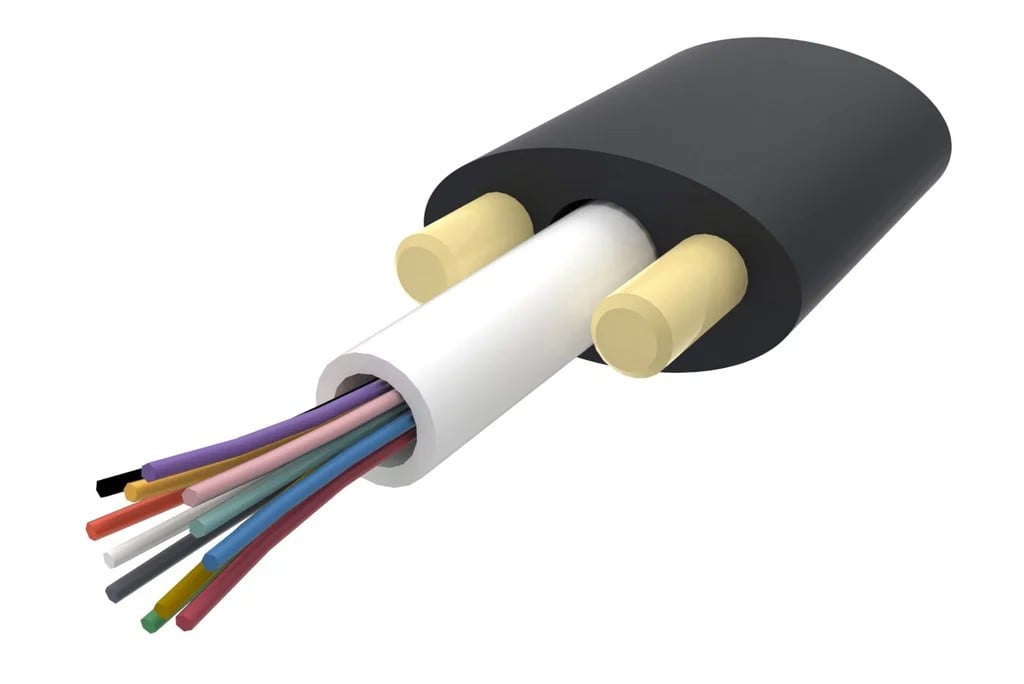
Flat drop fiber cables use a slim, rectangular profile designed for aerial and direct-to-home applications. This shape allows the cable to sit flush against surfaces, making it ideal for exterior building runs. Installers frequently use flat cables for last-mile connections between distribution points and end-user premises. In short, the compact design simplifies routing along walls and poles.
Flat cables often include embedded strength members, such as steel or fiberglass rods, for added support. These reinforcements maintain structural integrity during aerial spans. The design also minimizes wind resistance, which improves performance in exposed environments. This makes flat cables a popular choice for overhead deployments.
Structural Differences Between Round and Flat Cables
Round and flat drop fiber cables differ significantly in their construction and physical properties. Such differences directly influence how each cable performs in specific environments. Round cables distribute stress evenly due to their symmetrical design. Flat cables concentrate strength along specific axes, which suits directional installations.
Installers must consider flexibility, tensile strength, and environmental exposure when comparing the two. Round cables bend more uniformly, which reduces the risk of fiber damage during pulling. Flat cables offer better stability when mounted on surfaces or suspended between poles. Each design serves a distinct purpose within fiber network architecture.
Installation Considerations for Each Cable Type
Installation methods vary greatly between round and flat drop fiber cables. Round cables work best in conduit systems where pulling tension and bends require durability. Crews can install them using traditional pulling equipment without worrying about shape-related resistance. This makes them efficient for underground infrastructure projects.
Flat cables simplify aerial installations and exterior routing along buildings. Their lightweight design allows for quicker deployment with fewer mounting accessories. Contractors often prefer flat options when speed and accessibility matter. In aerial scenarios, a properly selected aerial fiber drop cable ensures reliable connectivity with minimal strain on support structures.
Performance in Different Environments
Environmental conditions play a major role in cable selection. Round drop fiber cables excel in underground and harsh conditions where moisture, pressure, and soil movement affect performance. Their strong jackets provide superior protection against external damage. This makes them ideal for long-term infrastructure investments.
Flat drop cables perform best in aerial and short-distance applications. Their design reduces wind load and improves stability during temperature fluctuations. Installers can secure them easily along poles or building exteriors. This versatility supports rapid deployment in residential and urban settings.

Advantages of Round Drop Fiber Cables
Round drop fiber cables offer several benefits that make them a strong choice for specific installations. Their durability and flexibility support demanding deployment scenarios. These cables also provide consistent performance over long distances, including the following features:
- Even stress distribution reduces fiber strain.
- Strong resistance to crushing and environmental pressure.
- Ideal for conduit and underground installations.
- Easier handling during long-distance pulls.
Advantages of Flat Drop Fiber Cables
Flat drop fiber cables provide unique benefits tailored to last-mile connectivity. Their compact design simplifies installation while maintaining structural integrity. The following features make them highly efficient for targeted deployments:
- Slim profile allows clean surface mounting.
- Embedded strength members support aerial spans.
- Lightweight construction speeds up installation.
- Reduced wind resistance improves stability.
The Right Cable for Your Project
Selecting between round and flat drop fiber cables depends on project requirements and environmental conditions. Contractors must evaluate installation methods, distance, and exposure to external elements. Round cables suit underground and high-stress environments where durability matters. Flat cables work best for aerial and building-mounted applications that require flexibility and speed.
Millennium Broadband Solutions supports these decisions with expert guidance and access to high-quality materials. We help ISPs and contractors identify the best solutions for each deployment scenario. We connect clients with trusted products from a wide network of suppliers. We can make sure projects are efficient, cost-effective, and aligned with performance goals.

Support Broadband Expansion With the Right Cable Solutions
Reliable fiber networks depend on choosing the right components from the start. Round and flat drop fiber cables each serve clear and different purposes in modern broadband infrastructure. Understanding these differences allows teams to optimize installations and avoid costly setbacks. Smart cable selection leads to stronger networks and better long-term performance.
Millennium Broadband Solutions continues to play an indispensable role in expanding connectivity across the United States. We provide end-to-end support, from network design and equipment sourcing to deployment assistance. Our focus on rural broadband development bridges connectivity gaps where it truly matters.
Make Informed Fiber Cable Decisions
Round and flat drop fiber cables each bring unique strengths to fiber deployments. The right choice depends on how and where the cable will operate. Contractors who understand these differences can improve installation efficiency and network reliability. As such, this knowledge translates into better outcomes for providers and end users.
If you need guidance on selecting the right fiber optic drop cables, Millennium Broadband Solutions can help. Our expertise, product range, and industry partnerships simplify even the most complex projects. Reach out today to make sure your next deployment uses the best materials for long-term success.