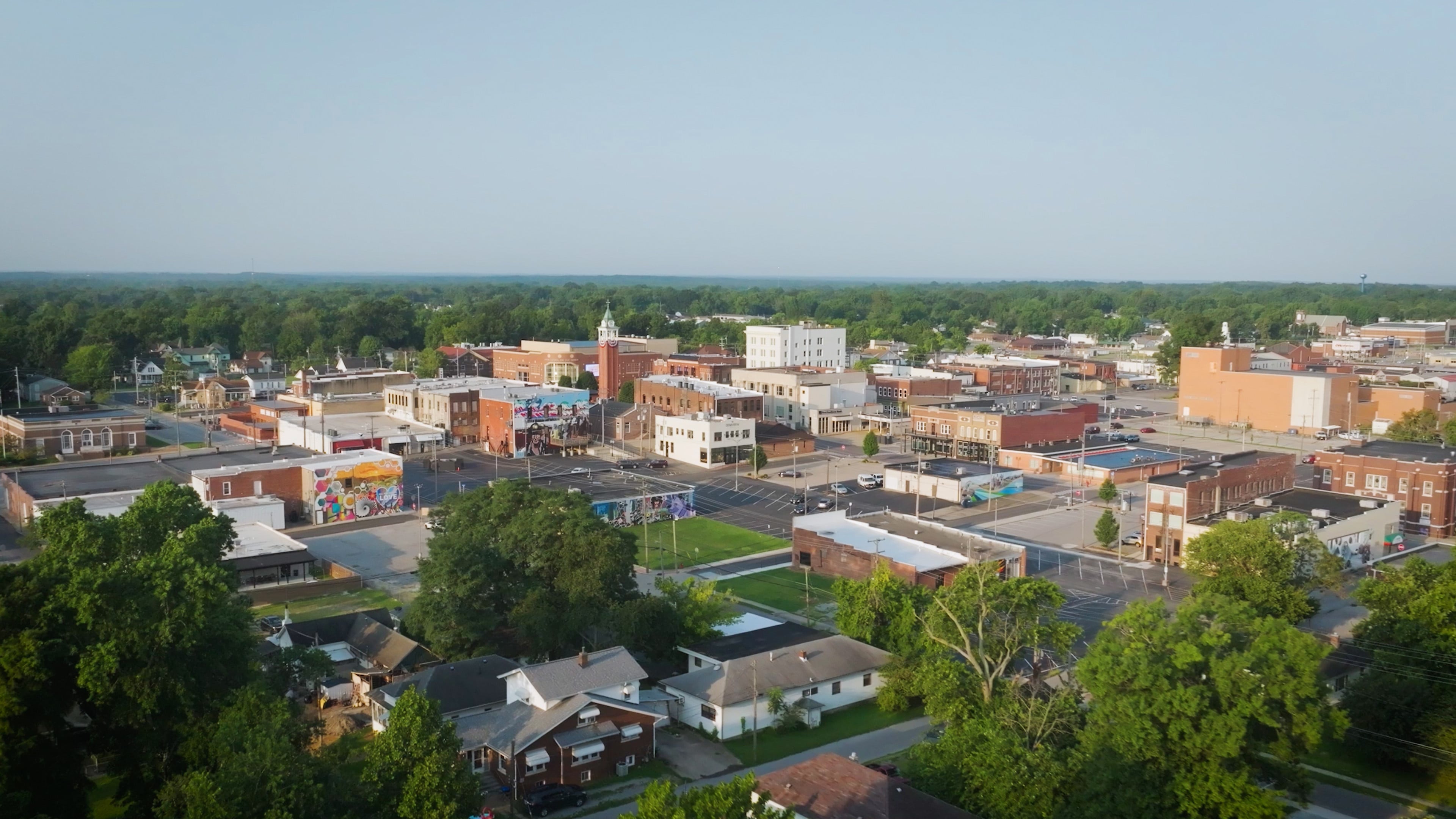
How ProTek Communications grew from one backyard fixed wireless tower into a rural fiber-to-the-home (FTTH) network across southern Illinois — and built eight broadband grant projects without ever losing a day waiting on fiber optic materials.
At a glance
| Customer | ProTek Communications — Marion, Illinois |
| Founded | Late 2015 / early 2016, as a fixed wireless ISP |
| Leadership | Cameron McCurdy, Founder & CEO Josh Watson, CFO |
| Service area | Southern Illinois — roughly eight counties |
| Scale today | ~12,000 passings · 4,000+ subscribers |
| Grant projects | 8 state broadband grants — Connect Illinois Round 2 (~1,500 passings) plus 7 of 8 awarded in Round 3 |
| Materials program | $70 million fiber optic materials program, front-loaded through Millennium |
| Network | 100% underground FTTH network; three nines of reliability to every location |
| Install throughput | From 8 installs in a good week to a sustained 50+ per week with three installers |
| Time to first customer | 6–8 months in the early days; now 1–2 weeks from project start |
| Take rate | 50–60% typical; 70–80% in the most rural areas |
| Five-year goal | 20,000 passings, 10,000+ subscribers |
| Standardized on | CommScope Prodigy® universal hardened connectivity |
| Millennium role | Fiber network design, fiber optic materials, logistics, forecasting, consolidated SKU sourcing, escalation |
The problem
In 2014, Cam McCurdy bought a house south of Marion, Illinois, and hit the same wall as everyone around him: rural internet that didn’t work. He and his wife ran a custom metal design business, and the online storefront was most of their income. So he asked on Facebook whether anyone else had the problem, and whether they’d chip in on a $500-a-month commercial internet connection. Roughly a hundred neighbors answered overnight.
By early 2016 there was a tower in his backyard and a hundred customers on fixed wireless internet. Demand kept outrunning the network. Every new subscriber was another connection competing for the same spectrum, and the towers could only reach so far into the places that needed service most. ProTek didn’t need a bigger wireless network. They needed a different solution.
Fiber to the home (FTTH) was the answer, and it changed what ProTek had to be good at. A fiber build is hundreds of part numbers — fiber optic cable, connectors, terminals, splice closures, vaults, and handholes — that have to work together, arrive in the right sequence, and survive going into southern Illinois ground, which is rock where you’d rather have dirt. ProTek had no engineering team, no materials plan, and no fiber optic supplier deep enough to tell them what they didn’t know to ask. They needed a partner before they needed product. That’s where Millennium came in.
A 200-passing FTTH pilot and a head start on fiber network design
Before there was a grant, there was a pilot. ProTek funded 200 passings out of their own pocket in 2019, for the express purpose of making their mistakes early. They had no fiber engineering capability, so Millennium Geospatial handled the fiber network design for them — OSP engineering, splice diagrams down to bill of materials, and the decisions ProTek didn’t yet know were decisions. That pilot is still in the ground. It runs about 70% adoption today, with a competitor now in the market.
It also proved the model worked. What it couldn’t prepare them for was the supply chain.
Round two taught them what breaks in a fiber optic supply chain
ProTek’s first state-funded build — Connect Illinois Round 2, roughly 1,500 passings — landed in the middle of Covid, when materials came from wherever materials could be found. They were building with CommScope’s full-size hardened fiber terminals alongside whatever else the supply chain would release, and the mismatch cost them.
“There was no standardization, because we just couldn’t. And that led to a lot of issues — material defects and things not working together properly — causing problems for splicers and the install crews. It became so tiresome and burdensome that we needed a solution. Fast.”
Ian Miller, Account Representative, Millennium
The worst of it was hardware they couldn’t get at all. Several hundred passings had to be built with every customer manually spliced in, because no preterminated, hardened connector drop cable was available. That cost never went away. It is still on the books today, every time someone in those early neighborhoods signs up.
Then the real project landed: seven broadband grants at once
Connect Illinois Round 3 wasn’t a larger version of round two. ProTek applied for four broadband grants, was encouraged by DCEO to seek more, applied for four additional, and won seven of eight. Counting round two, that is eight separate grant projects — each in its own geography, each requiring its own reporting and accounting. All at once, ProTek had to:
- Specify, quote, and track hundreds of SKUs by project area, because grant reporting wouldn’t let them co-mingle
- Take fiber installation volume from roughly 30 a month to 200-plus, with the crews they had
- Build every applied-for location, with no exceptions, even where a competitor got there first
- Finish inside a window with no slack in it, in a market where lead times were about to move
Round two had already shown them what happens when the materials don’t line up. Round three was eight times the size, and they had one chance to get it right.
The solution
The approach that came out of round two had three parts, and ProTek owned only one of them. ProTek set the strategy. CommScope set the FTTH network architecture. Millennium made it arrive.
A year of conversations before a dollar was awarded: choosing a hardened fiber optic connector
Millennium account representative Ian Miller started meeting with ProTek roughly a year before Round 3 was decided, working through their situation and the options in front of them. He brought in Junior Slagle, President of NextGen Sales and CommScope’s manufacturer representative, and the two of them did something unusual: they brought the fiber connectivity hardware to Marion.
“We decided to bring in the CommScope product van so ProTek could see our end-to-end solutions and have hands-on product demonstrations. What really made the Prodigy solution an obvious choice was its small form factor and quarter-turn lock for the drop cables. The double-keyed drop makes for foolproof installation, since they only go into the terminal one way. ProTek had been using CommScope full-size terminal solutions, and once they saw the benefits of Prodigy, they knew it was the right way to move their network forward.”
Junior Slagle, President, NextGen Sales
Why a small form factor fiber optic connector changes FTTH economics
What ProTek saw in the van was speed and simplicity. What CommScope built it for goes further than that — ask them what Prodigy is and you don’t get a connector answer. You get a construction answer.
“Prodigy is more than just a connector. When we look at building a network, roughly 70% is attributed to the cost of building the infrastructure itself. So going with a small form factor connector such as Prodigy enables us to really shrink those connectivity items, and therefore reduce the size of the infrastructure that needs to be built in the ground.”
Paul Hubbard, Senior Director of Solutions Architecture, CommScope
That is ProTek’s entire problem, solved from the other direction. Their costs are punishing because of what it takes to put anything in southern Illinois ground. A smaller fiber optic connector means a smaller bore, a smaller vault or handhole, less restoration — on every passing, across eight projects. And because Prodigy fiber drop cables arrive preterminated from the factory and built to length, the fiber splicing at the house disappears, which means a new technician and a ten-year veteran do the identical job, the identical way, with a quarter turn.
Millennium secured the fiber optic materials a year before anyone needed them
Specifying the right connector solved the install problem. It did nothing about getting several hundred part numbers onto a lot in southern Illinois before every other ISP in the country started building at the same time.
So months before construction, Cam sent Ian bills of material for every project area. Millennium quoted them back segmented by area to satisfy grant reporting, and ProTek bought nearly the entire build up front.
“On the advice of Ian and others at Millennium, they predicted that within 52 weeks we’re going to have some serious shortages on these components. That’s one of the key pieces of input that led us to purchase all the inventory early. Otherwise, if we had waited another year, there definitely would have been scheduling delays that would have impacted our ability to finish on time, like we did.”
Cam McCurdy, Founder & CEO, ProTek Communications
Millennium carried excess stock on ProTek’s SKUs for the length of the build — which is what made the mid-project pivots survivable. When the scope changed from one splice tray type to ribbon fiber splicing, the replacement shipped the next day instead of stalling the job for two months. When a truckload of vaults arrived with the wrong lids, it was corrected inside 24 hours. Millennium was positioned to solve the issue, immediately.
The result
Speed: from 8 to 50+ fiber installations a week
From 8 installs in a good week to a sustained 50-plus — roughly 30 a month to more than 200. Time from project start to first customer online fell from 6–8 months to 1–2 weeks. CommScope confirms a jump like ProTek’s is what an operator should expect from Prodigy, provided they standardize early and have material on site when the trench is open.
“Prodigy definitely solved the technology and operational problems for us. At our peak, our team of installers aimed to complete 50-plus installations per week, up from about eight during a typical good week before. I can definitively say that if it weren’t for the Prodigy line, we could not have accomplished our goals.”
Cam McCurdy, Founder & CEO, ProTek Communications
Supply: zero shortages on a $70 million fiber optic materials program
Eight grant projects. A $70 million fiber optic materials program. Zero shortages. ProTek’s CFO was asked what the inventory challenges were on a build this size, and his answer is not the normal answer.
“As far as inventory challenges go for this project, I can confidently say there weren’t any. Because of Millennium.”
Josh Watson, CFO, ProTek Communications
Scale: from a 200-passing pilot to a 12,000-passing fiber network
200 passings in the pilot to roughly 12,000 today. 155 subscribers to more than 4,000. Eight grant projects delivered on budget and on schedule. Surrounding communities of Royalton, Ziegler, and Thompsonville had no high-speed internet; they have fiber broadband now, including their fire and police departments. Realtors call ProTek to check coverage before listing a home — and some list ProTek as a feature.
Reliability: a 20 Gig school district fiber network
Marion Community Unit School District 2 runs eight buildings, nearly 4,000 students, and online state testing from January through May with up to 2,500 students testing at once. ProTek’s own engineers rebuilt the district’s fiber network across all eight buildings and doubled their bandwidth from 10 Gig to 20 Gig. Three years in, the district has had no outage attributable to ProTek.
“In the technology world, they just know when they click that button, they want it to work. And I can go home at night knowing that if they click the button, it’s going to work. ProTek makes it work.”
Jerry Stanley, Director of Technology, Marion CUSD 2
The backyard tower is still standing
A decade later, Cam McCurdy’s first tower is still standing. Nothing else about ProTek looks the same. Twelve thousand passings. Four thousand subscribers and counting. Eight broadband grant projects delivered on budget and on schedule, in some of the hardest ground in Illinois.
Three things made that possible.
ProTek brought the ambition and the local knowledge. CommScope engineered the hardened connectivity architecture that made fifty installs a week achievable — a connector small enough to shrink the civil work, and simple enough that a new hire and a ten-year veteran do the job identically, every time. Millennium made sure it was sitting on the lot in Marion a year before the shortage hit.
“Scale is really critical when it comes to this type of deployment. Having the right distribution partner servicing and supporting you really enables the full end-to-end deployment cycle. Ensuring that the contractors and the installation partners have the product in the right place at the right time is critical to that network success.”
Paul Hubbard, Senior Director of Solutions Architecture, CommScope
Watch the video
Hear the story from the people who built it.
See how ProTek went from one backyard tower to 12,000 passings, told by the team that made it happen.