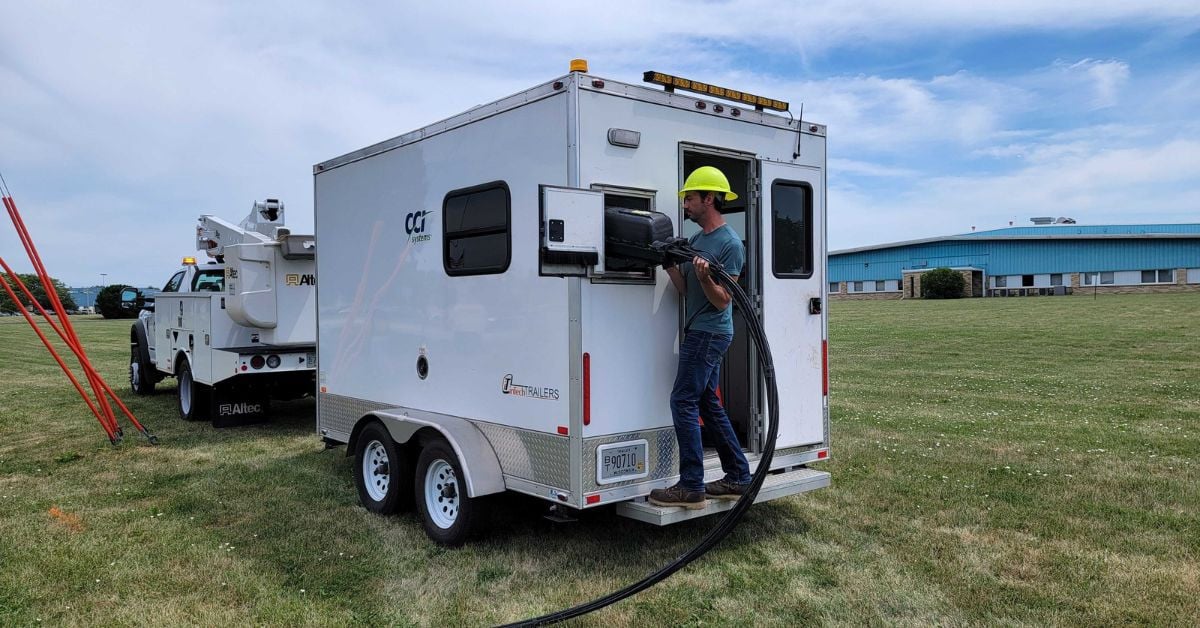
Fiber splicing demands precision, control, and consistency in every environment. Field conditions rarely provide ideal working spaces, especially in rural or active construction zones. A properly configured splice trailer solves this challenge by creating a controlled, mobile workspace. Contractors and ISPs rely on these setups to maintain quality while staying on schedule.
Millennium Broadband Solutions supports these operations nationwide by delivering equipment, materials, and expertise to complete broadband builds from start to finish. Teams working in rural deployments or new construction zones benefit from flexible, reliable setups that adapt to changing jobsite conditions. A temporary splice location with a trailer ensures continuity without sacrificing workmanship. This guide explains how to set up a temporary splice location with a trailer.

Why a Splice Trailer Matters in Field Operations
A splice trailer creates a controlled environment where technicians can perform delicate fiber work without interference. Dust, moisture, and temperature fluctuations can all influence splice quality. A trailer eliminates many of these variables by providing insulation and climate control. The consistency leads to lower splice loss and better network performance.
Field crews often move between multiple splice points in a single project. A mobile setup allows teams to reposition quickly without rebuilding a workspace each time. This efficiency reduces downtime and keeps crews productive. It also improves safety by keeping equipment organized and contained.
Choose the Right Location for Setup
The success of a temporary splice location starts with proper placement. Crews should select a stable, level surface that supports the trailer and surrounding equipment. Uneven ground can affect equipment calibration and create safety hazards. Accessibility also plays an integral role in site selection.
Position the trailer close to the splice point to minimize cable handling. Long cable runs increase the risk of damage or contamination. Make sure the area allows for safe vehicle access and equipment staging. Crews should also consider traffic flow and avoid placing the trailer in high-risk zones.
Prepare the Trailer for Operation
Before any splicing begins, crews must prepare the trailer for optimal performance. Start by stabilizing the trailer using leveling jacks or blocks. A stable platform ensures accurate splicing and protects sensitive equipment. Next, connect the trailer to a reliable power source.
Technicians should verify that all internal systems function properly. Lighting, outlets, and climate controls must operate without interruption. Clean all work surfaces to remove dust or debris before bringing fiber inside. This preparation step prevents contamination and supports high-quality splicing results.
Essential Equipment Inside the Splice Trailer
A well-equipped splice trailer supports efficiency and precision during fiber work. Each tool and component should have a designated space to reduce clutter. Organized workstations help technicians maintain focus and avoid mistakes. Proper storage also protects expensive equipment during transport.
Key equipment typically includes:
- Fusion splicer with calibration tools
- Fiber cleavers and stripping tools
- Splice trays and organizers
- Test equipment such as OTDRs and power meters
- Cleaning supplies for connectors and fibers
- Backup power solutions for uninterrupted work
Each item plays a role in maintaining splice integrity. Crews should inspect tools regularly and replace worn components as needed.

Manage Environmental Conditions
Environmental control affects splice quality. Fiber splicing requires stable temperature and low humidity to achieve consistent results. A splice trailer provides climate control systems that regulate these conditions. Technicians should monitor these systems throughout the workday.
Air filtration also maintains a clean environment. Dust particles can interfere with fiber alignment and increase splice loss. Keep doors closed as much as possible to preserve internal conditions. Crews working in extreme climates must adjust settings to maintain optimal performance.
Cable Handling and Entry Setup
Proper cable handling prevents damage before the splicing process even begins. Crews should route cables into the trailer using designated entry points. These entry systems protect fibers from bending, pinching, or contamination. As such, maintaining proper bend radius remains critical throughout the setup.
Secure cables outside the trailer to prevent unnecessary movement. Use reels or supports to manage slack and maintain organization. Inside the trailer, position cables to allow easy access without crowding the workspace. Clean and prep fibers immediately before splicing to ensure the best results.
Workflow Optimization Inside the Trailer
An efficient workflow improves speed and accuracy. Technicians should establish a clear process for each splice operation. This includes preparation, splicing, testing, and documentation. Consistency reduces errors and ensures repeatable results across the project.
Arrange workstations to support a logical flow of tasks. Place frequently used tools within easy reach. Avoid unnecessary movement that can disrupt focus or introduce contamination. Teams that maintain structured workflows complete jobs faster without compromising quality.

Safety Considerations for Field Splicing
Safety remains a top priority when setting up a temporary splice location. Trailers must include proper ventilation and electrical safeguards. Technicians should inspect all connections before powering equipment. Faulty wiring or overloaded circuits can create serious risks.
Crews should also maintain clear walkways inside and outside the trailer. Clutter increases the chance of trips or equipment damage. Use proper personal protective equipment when handling fiber shards or tools. Establishing safety protocols protects workers and equipment throughout the project.
When To Use Fiber Splicing Trailers for Rent
Not every project requires a permanent trailer investment. Many contractors choose fiber splicing trailers for rent to maintain flexibility across multiple jobs. Rental options allow teams to scale operations based on project size and duration. This approach reduces upfront costs while still providing professional-grade workspaces.
Millennium Broadband Solutions offers tailored rental solutions designed for real-world field conditions. Our trailers include climate control, storage, and ergonomic layouts that support productivity. This flexibility helps contractors meet deadlines without compromising quality. Rental solutions also simplify logistics for projects in remote or rural areas.
Build a Reliable Temporary Splice Setup
A temporary splice location with a trailer provides the control and efficiency needed for modern fiber deployments. Proper setup ensures consistent splice quality, even in challenging environments. From site selection to workflow optimization, every step contributes to overall success. Teams that follow these best practices reduce errors and improve network reliability.
Millennium Broadband Solutions continues to support ISPs and contractors with equipment, expertise, and scalable solutions across the US. We support teams in completing broadband infrastructure projects efficiently, especially in underserved rural areas. A well-prepared splice trailer setup allows crews to stay productive and maintain high standards. In today’s fast-paced fiber builds, that advantage makes a measurable difference.